Lecture 3: Hyperthyroidism — What Patients Need to Know
Hyperthyroidism is the opposite of hypothyroidism — instead of too little thyroid hormone, your body is flooded with too much. The result is a system running at full throttle: racing heart, trembling hands, weight loss despite eating well, and a nervous system that cannot settle down. It is frequently misdiagnosed as an anxiety disorder, a cardiac condition, or even a psychiatric illness — sometimes for years before the thyroid is identified as the source.
Understanding what hyperthyroidism is, how it presents, and what treatment involves is essential for any patient navigating this diagnosis.
What Is Hyperthyroidism?
Hyperthyroidism means your thyroid gland is producing more thyroid hormone than your body needs. Excess thyroid hormone accelerates virtually every metabolic process: your heart beats faster, your body burns energy more rapidly, your nervous system becomes hyperactivated, and your muscles — including your heart — are placed under sustained stress.
What Causes It?
Graves' disease is the most common cause of hyperthyroidism, accounting for roughly 70–80% of cases. It is an autoimmune condition in which the immune system produces antibodies (TSI — thyroid-stimulating immunoglobulins) that mimic TSH and continuously stimulate the thyroid to produce hormone. Graves' disease has a strong genetic component and is far more common in women than men.
Other causes include:
- Toxic multinodular goiter — multiple nodules in the thyroid that produce hormone independently, outside normal pituitary regulation
- Toxic adenoma — a single autonomous nodule producing excess hormone
- Thyroiditis — inflammation of the thyroid (from viral illness, postpartum changes, or other causes) that releases stored hormone into the bloodstream; this is usually temporary
- Excess iodine — from medications (amiodarone is a common culprit) or iodine-containing contrast dyes
- Overtreatment with thyroid hormone — too high a dose of levothyroxine or desiccated thyroid
The Physical Symptoms
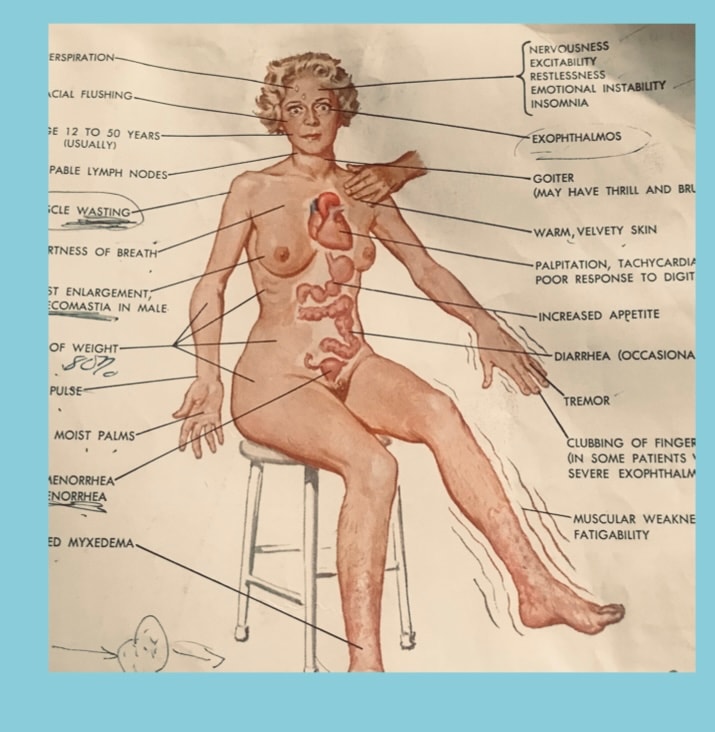
Hyperthyroidism produces a distinctive cluster of symptoms that reflect a body running too fast.
Common physical symptoms include:
- Rapid or irregular heartbeat (palpitations, atrial fibrillation)
- Unintentional weight loss despite increased appetite
- Heat intolerance and excessive sweating
- Tremor — fine shaking of the hands and fingers
- Fatigue and muscle weakness, particularly in the thighs and upper arms
- Frequent bowel movements or diarrhea
- Difficulty sleeping
- Enlarged thyroid gland (goiter)
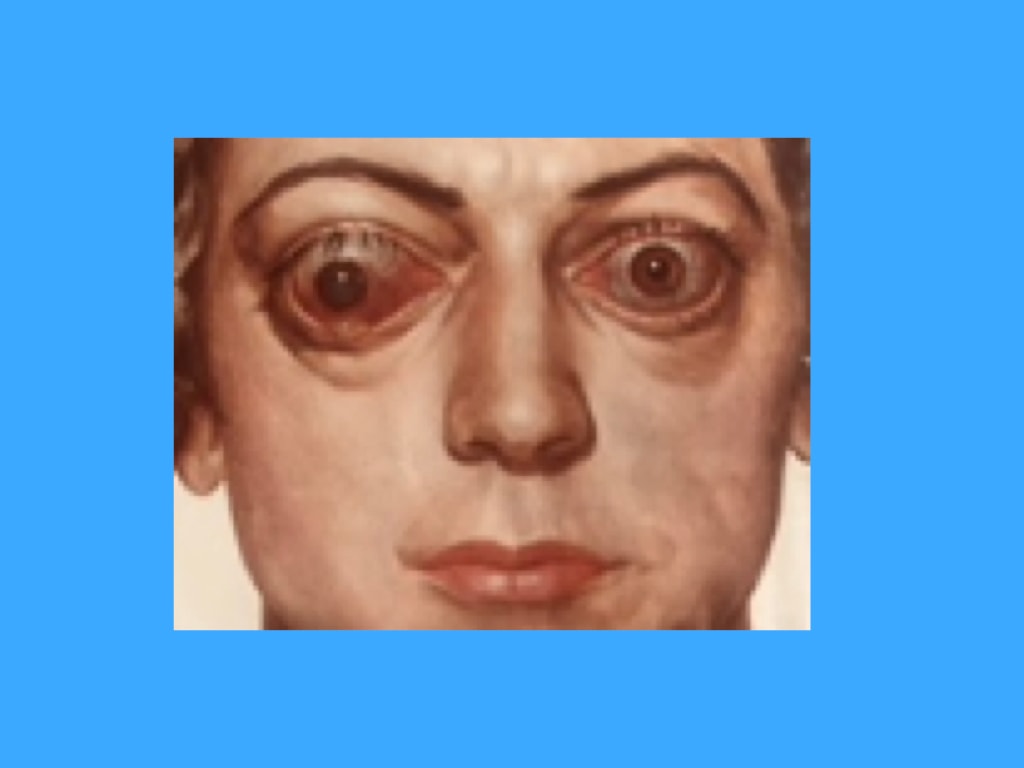
- In Graves' disease specifically: exophthalmos (bulging or protruding eyes) and pretibial myxedema (thickening of the skin on the shins)
- In women: lighter or absent menstrual periods
Thyroid storm — a rare but life-threatening extreme of hyperthyroidism — can occur when the condition is untreated or triggered by surgery, infection, or other physiological stress. It requires emergency medical care.
The Emotional and Psychological Impact
The emotional dimension of hyperthyroidism is profound and frequently misunderstood — by patients, by families, and by physicians.
Anxiety is one of the hallmark symptoms of hyperthyroidism, and it is biochemically driven. Excess thyroid hormone directly activates the sympathetic nervous system — the same system that produces the fight-or-flight response. Patients feel anxious, on edge, and unable to relax, not because of psychological causes but because their body chemistry is producing those sensations continuously.
This creates a cruel diagnostic trap: patients present to their primary care physician or even a psychiatrist with anxiety, insomnia, and racing thoughts. They are prescribed anti-anxiety medication or antidepressants. The thyroid is never checked. Months or years pass before the correct diagnosis is made.
Irritability and emotional lability — rapid mood swings, difficulty controlling emotions, disproportionate reactions to minor stressors — are common and distressing. Patients describe feeling "wired," unable to slow their thoughts, and easily overwhelmed. Relationships suffer. Work suffers. Patients often blame themselves for what is, in fact, a physiological state.
Depression can follow hyperthyroidism, particularly after treatment when thyroid hormone levels drop rapidly. The body that was running at full speed suddenly slows, and the adjustment can feel like a crash.
The fear of cardiac consequences — atrial fibrillation, heart failure, stroke — is real and warranted in untreated or undertreated hyperthyroidism. This fear, once a patient understands what excess thyroid hormone does to the heart, adds a layer of urgency and anxiety to the diagnosis that must be addressed directly.
Diagnosis
Hyperthyroidism is diagnosed through blood tests:
- TSH will be suppressed — often undetectable — because the pituitary senses excess thyroid hormone and stops stimulating the thyroid
- Free T4 and Free T3 will be elevated
- TSI (thyroid-stimulating immunoglobulins) or TRAb (TSH receptor antibodies) confirm Graves' disease
- Thyroid uptake and scan — a nuclear medicine test — can distinguish Graves' disease from toxic nodular goiter and thyroiditis, which is important because the treatments differ
Treatment Options
Unlike hypothyroidism, hyperthyroidism has three distinct treatment pathways, each with different implications for the patient's long-term thyroid function.
1. Antithyroid Medications
Methimazole (the preferred agent) and propylthiouracil (PTU) block the thyroid's production of hormone. They do not cure Graves' disease but can control it while the immune system — in some patients — goes into remission.
- A course of 12–18 months of antithyroid medication results in lasting remission in approximately 30–50% of Graves' patients
- Side effects include rash, joint pain, and — rarely — agranulocytosis (a dangerous drop in white blood cells)
- Beta-blockers (propranolol, atenolol) are often prescribed alongside antithyroid drugs to control heart rate and tremor while hormone levels normalize
2. Radioactive Iodine (RAI)
Radioactive iodine (I-131) is taken orally and selectively destroys thyroid tissue. It is highly effective and has been used safely for decades.
- Most patients become hypothyroid after RAI and require lifelong thyroid hormone replacement
- RAI is contraindicated in pregnancy and in patients with significant Graves' eye disease (it can worsen exophthalmos)
- The transition to hypothyroidism after RAI requires careful monitoring and dose adjustment
3. Surgery (Thyroidectomy)
Surgical removal of the thyroid — total or near-total thyroidectomy — provides definitive treatment and is the preferred option in certain situations: very large goiters, suspected malignancy, significant eye disease, or patient preference.
- Surgery requires an experienced thyroid surgeon; outcomes are strongly correlated with surgical volume
- Risks include damage to the parathyroid glands (causing low calcium) and injury to the recurrent laryngeal nerve (affecting voice)
- Patients become hypothyroid after total thyroidectomy and require lifelong levothyroxine
Choosing a Treatment
The right treatment depends on the cause of hyperthyroidism, the severity, the patient's age and health status, pregnancy status, the presence of eye disease, and — critically — the patient's own values and preferences.
There is no universally correct answer. A 25-year-old woman with mild Graves' disease who wants to preserve her thyroid and avoid radiation may choose antithyroid medication. A 60-year-old man with a toxic nodule and atrial fibrillation may be best served by radioactive iodine or surgery. These decisions deserve a thorough, unhurried conversation with a thyroid specialist.
What You Can Do Right Now
- If you have symptoms of hyperthyroidism and have not been evaluated, ask your doctor for a TSH, Free T4, Free T3, and TSI/TRAb panel.
- If you have been diagnosed and are struggling emotionally, know that much of what you are feeling is biochemically driven — it will improve as your hormone levels normalize.
- If you are facing a treatment decision, ask your physician to walk you through all three options and what each means for your long-term thyroid function and quality of life.
- Give yourself time. The emotional and physical recovery from hyperthyroidism — and from its treatment — takes longer than most patients expect.
Dr. Guttler spent 50 years as a private thyroid medical specialist. He does not treat patients. The information on this site is for educational purposes and does not constitute medical advice. Always consult your physician for diagnosis and treatment.
Explore Topics
Written by
Dr. Guttler
Clinical Thyroidologist with over 50 years of experience treating patients with thyroid cancer, nodules, hypothyroidism, and hyperthyroidism. Dr. Guttler created these patient education lectures to help people understand their thyroid condition and make informed decisions about their care.