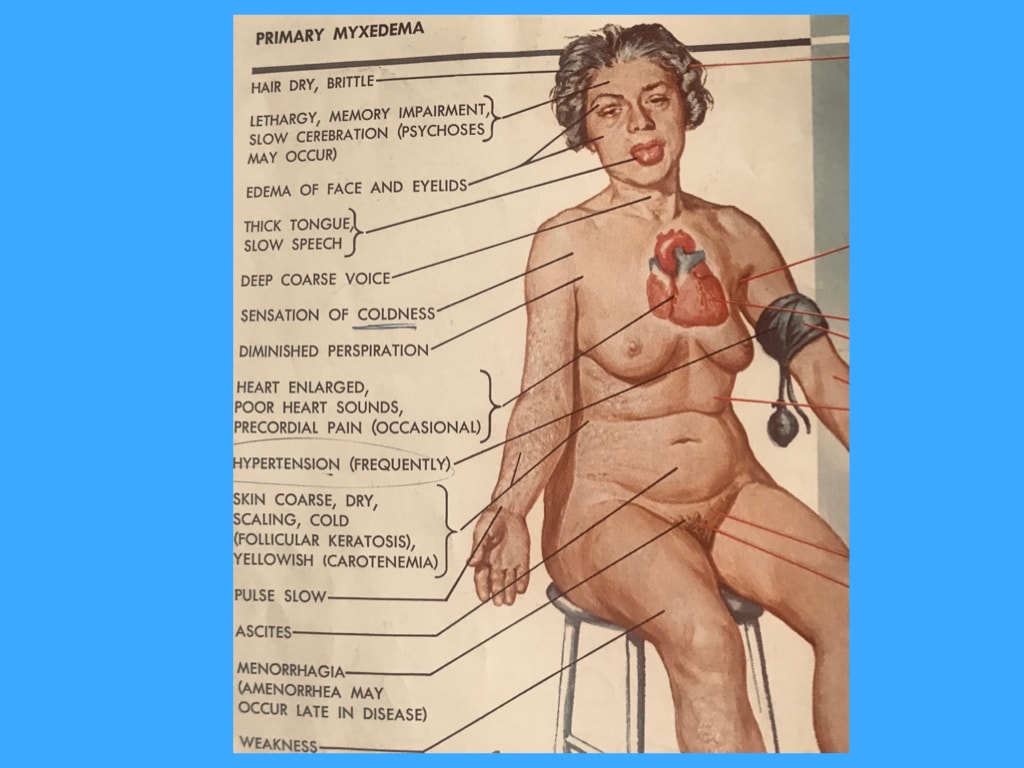
10 Signs Your Thyroid May Be Underactive
Your thyroid is a small gland with an enormous job. It produces hormones that regulate your metabolism, energy, body temperature, heart rate, mood, and much more. When it slows down — a condition called hypothyroidism — the effects ripple through virtually every system in your body.
The tricky part is that hypothyroidism develops gradually. Symptoms creep in slowly, and because they overlap with so many other conditions (depression, anemia, menopause, chronic fatigue syndrome), they're easy to attribute to something else — or to simply getting older.
Here are 10 signs that your thyroid may be underactive. If several of these sound familiar, it's worth asking your doctor for a thyroid blood test.
1. You're Exhausted — No Matter How Much You Sleep
This is the most common complaint among hypothyroid patients, and it's one of the most debilitating. We're not talking about ordinary tiredness. This is a bone-deep fatigue that doesn't improve with rest, that makes getting out of bed feel like climbing a mountain, and that persists even after a full night's sleep.
Thyroid hormones are essential for cellular energy production. When levels drop, your cells can't generate energy efficiently — and you feel it everywhere.
2. You've Gained Weight Without Changing Your Diet
Unexplained weight gain — or an inability to lose weight despite diet and exercise — is a classic hypothyroid symptom. A sluggish thyroid slows your metabolism, meaning your body burns fewer calories at rest.
The weight gain associated with hypothyroidism is typically modest (5–10 pounds), though it can be more. Much of it is fluid retention rather than fat. Treating the thyroid often helps, but it's important to have realistic expectations — thyroid treatment is not a weight loss solution.
3. You Feel Cold All the Time
Do you reach for a sweater when everyone else is comfortable? Are your hands and feet perpetually cold? Feeling cold — especially cold intolerance that's new or worsening — is a hallmark hypothyroid symptom.
Thyroid hormones help regulate body temperature. When they're low, your body generates less heat. Some patients describe feeling cold from the inside out, no matter how many layers they wear.
4. Your Skin Is Dry and Your Hair Is Thinning
Thyroid hormones support cell turnover throughout the body, including in the skin and hair follicles. When levels drop, skin becomes dry, rough, and flaky. Nails may become brittle and slow-growing.
Hair thinning is particularly distressing for many patients. It typically affects the entire scalp rather than patchy areas, and may also affect the outer third of the eyebrows — a classic (though not universal) sign of hypothyroidism.
5. You're Constipated
The digestive system slows down along with everything else when thyroid hormone is low. Food moves through the intestines more slowly, leading to constipation that doesn't respond well to dietary changes or increased water intake.
If you've developed new or worsening constipation without a clear dietary explanation, thyroid function is worth checking.
6. Your Mood Has Changed — Especially Depression
Thyroid hormones directly influence brain chemistry, including the production and regulation of serotonin. Low thyroid hormone levels are strongly associated with depression, low motivation, and emotional flatness.
Many patients with hypothyroidism are treated for depression for months or years before anyone checks their thyroid. If you're on antidepressants and not responding as expected, or if your depression came on gradually alongside other physical symptoms, ask your doctor to check your thyroid.
7. You're Struggling With Brain Fog and Memory
"I feel like I'm thinking through cotton wool." This is how many hypothyroid patients describe the cognitive effects of low thyroid hormone. Difficulty concentrating, forgetfulness, slowed thinking, and trouble finding words are all common.
These symptoms can be particularly frightening, especially in older adults who may worry about dementia. In many cases, treating the thyroid significantly improves cognitive function.
8. Your Heart Rate Is Slower Than Usual
Thyroid hormones influence heart rate. Hypothyroidism can cause bradycardia — a slower-than-normal heart rate (below 60 beats per minute). You may notice this as a feeling of sluggishness, or it may be picked up incidentally during a physical exam or EKG.
Hypothyroidism can also raise cholesterol levels, increasing cardiovascular risk over time.
9. Your Muscles Ache and Feel Weak
Muscle aches, stiffness, cramps, and weakness — particularly in the shoulders and hips — are common in hypothyroidism. Some patients are diagnosed with fibromyalgia before anyone thinks to check the thyroid.
The mechanism isn't fully understood, but thyroid hormones appear to be important for normal muscle metabolism and repair. Treating hypothyroidism often significantly reduces muscle symptoms.
10. Your Menstrual Cycle Has Changed
For women, hypothyroidism can cause heavier, more frequent, or more irregular periods. It can also contribute to fertility problems and pregnancy complications. Thyroid function is routinely checked as part of a fertility workup for this reason.
Conversely, hyperthyroidism (overactive thyroid) tends to cause lighter or absent periods — so any significant change in your cycle is worth discussing with your doctor.
What to Do If These Sound Familiar
If several of these symptoms resonate with you, the next step is simple: ask your doctor for a thyroid blood test. The basic test is a TSH (thyroid-stimulating hormone) level. If TSH is elevated, your doctor will likely also check Free T4.
A few important notes:
- TSH alone may not tell the whole story. If your TSH is in the "normal" range but you have many of these symptoms, ask for Free T3 as well. Some patients have low T3 despite normal TSH.
- The reference range is not the same as optimal. A TSH at the high end of normal may still be associated with symptoms in some people.
- Symptoms matter. A good doctor treats the patient, not just the lab value.
Don't dismiss these symptoms as "just stress" or "just getting older." They may have a treatable cause — and you deserve to find out.
Dr. Guttler spent 50 years as a private thyroid medical specialist. The information on this site is for educational purposes and does not constitute medical advice. Always consult your physician for diagnosis and treatment.
Explore Topics
Written by
Dr. Guttler
Clinical Thyroidologist with over 50 years of experience treating patients with thyroid cancer, nodules, hypothyroidism, and hyperthyroidism. Dr. Guttler created these patient education lectures to help people understand their thyroid condition and make informed decisions about their care.